One of the most common things people say as they get older is, “I’m just losing muscle—it’s part of aging.” While there’s some truth to that, it’s not the full story.
Yes, muscle loss happens naturally with age. But the bigger truth is this:
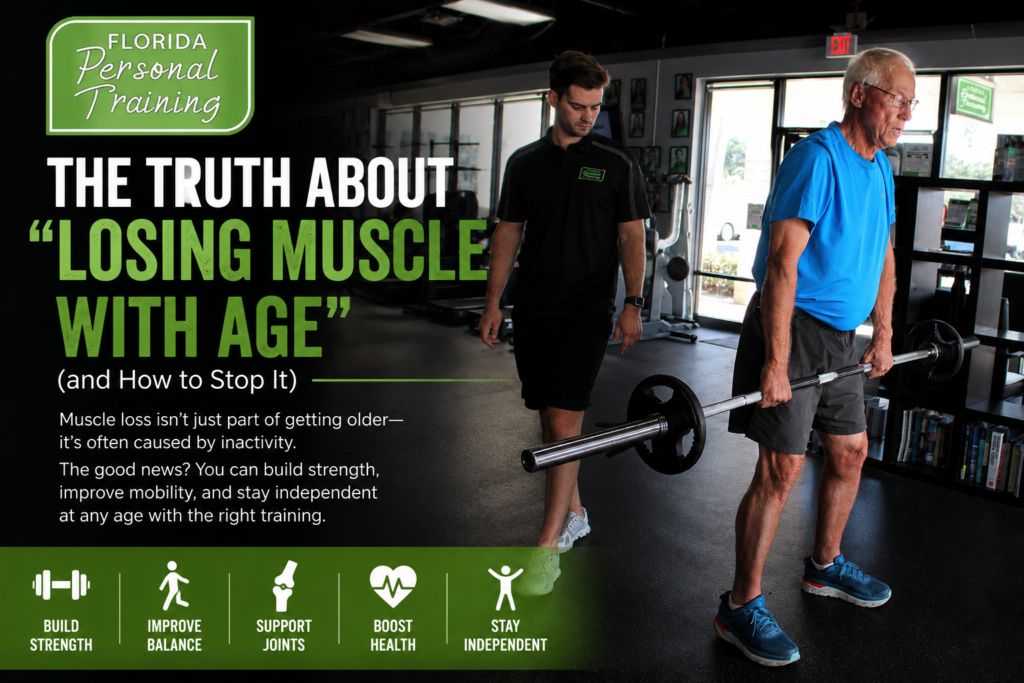
Most muscle loss isn’t caused by aging alone—it’s caused by inactivity.
That’s important because it means you can do something about it.
What Actually Happens to Muscle as We Age?
Starting around age 30, adults can begin to lose 3–8% of muscle mass per decade, and that rate can increase after 60. This process is called sarcopenia.
But sarcopenia isn’t just about looking less toned. It affects how you move, how strong you feel, and how independent you remain.
Loss of muscle can lead to:
- Reduced strength and stamina
- Poor balance and coordination
- Increased risk of falls
- Slower metabolism
- Joint instability
- Difficulty with daily tasks like climbing stairs, carrying groceries, or getting up from a chair
This is often when people start saying, “I just don’t feel as capable as I used to.”
The good news? Your body can still adapt.
Muscle Can Be Built at Any Age
This surprises a lot of people.
Research continues to show that adults in their 50s, 60s, 70s—and even 80s—can improve muscle strength, increase lean mass, and enhance mobility through proper resistance training.
Your body doesn’t stop responding to exercise because of age.
It simply becomes more important to train smarter.
Why Strength Training Is the Answer
Strength training sends your body a signal: keep this muscle—it’s still needed.
Without that signal, your body becomes more efficient by reducing what it doesn’t use.
That’s why walking alone, while excellent for health, often isn’t enough to preserve muscle.
A well-designed strength program helps:
- Maintain bone density
- Protect joints
- Improve posture
- Increase balance and coordination
- Reduce pain by improving movement quality
- Make everyday activities easier
For active aging, strength training isn’t optional—it’s foundational.
Protein Matters More Than You Think
Exercise is only half the equation.
As we age, the body becomes less efficient at using protein to rebuild and maintain muscle. This means older adults often need more protein, not less.
Aiming for consistent protein intake throughout the day can help support:
- Recovery
- Strength gains
- Energy levels
- Healthy metabolism
Pairing strength training with proper nutrition creates the best environment for preserving muscle.
The Biggest Mistake: Waiting Too Long
Many people wait until they feel weak, lose balance, or get injured before focusing on strength.
The better strategy is prevention.
Think of strength like savings—the earlier and more consistently you invest, the more you have when you need it.
Building strength now helps protect your future mobility and independence.
What You Can Do Starting Today
You don’t need intense workouts or hours in the gym.
Start with:
✔ Strength training 2–3 times per week
✔ Prioritizing leg, core, and upper body exercises
✔ Eating enough protein daily
✔ Staying consistent
✔ Working with a coach if you have limitations or injuries
The goal isn’t bodybuilding.
The goal is staying capable.
The Bottom Line
Losing muscle with age may be common—but it doesn’t have to be your reality.
Strength loss is not just “getting older.” In many cases, it’s a sign your body needs more challenge, better movement, and consistent care.
The sooner you start, the better you’ll move, feel, and function for years to come.
Because healthy aging isn’t about slowing down.
It’s about staying strong enough to keep doing what you love.