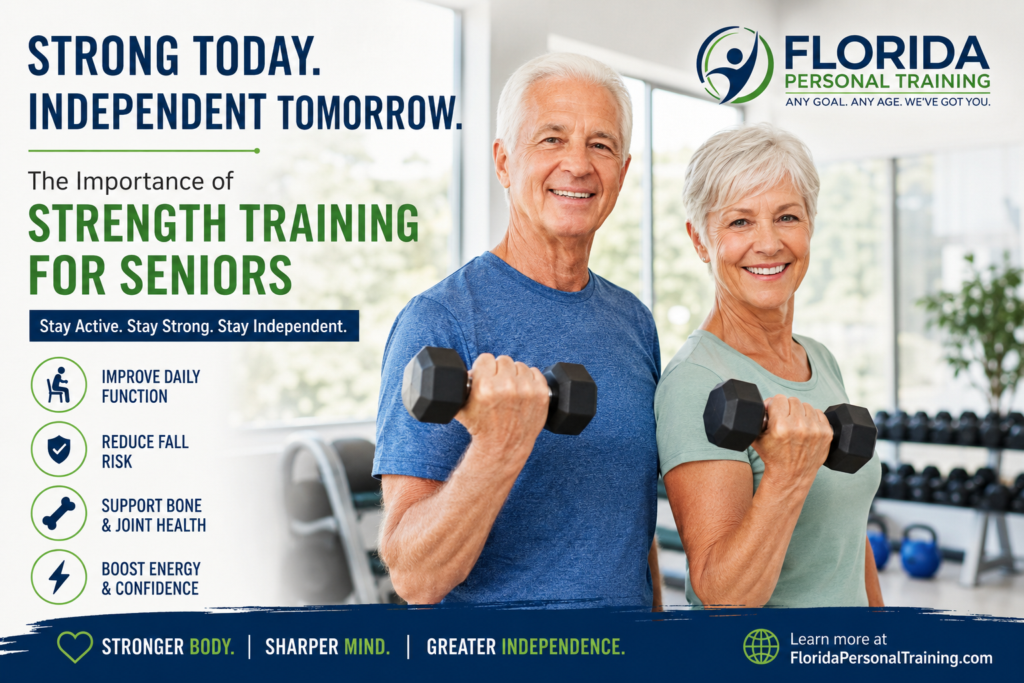
Why Strength Training Is Essential for Seniors to Maintain Independence
As we age, staying independent becomes one of the most important factors in maintaining quality of life. Simple daily activities like getting out of a chair, climbing stairs, carrying groceries, or walking confidently through a parking lot all rely on strength, balance, mobility, and coordination. The good news is that the body can continue to build strength and improve function well into later years through properly designed exercise.
Strength training is not just for athletes or younger adults. For seniors, it is one of the most effective tools for preserving independence, reducing the risk of falls, improving energy levels, and continuing to enjoy an active lifestyle.
Strength Naturally Declines With Age
Beginning around age 30, adults gradually lose muscle mass and strength each decade. This process, known as sarcopenia, accelerates as we get older if we do not actively challenge our muscles. Loss of strength can lead to:
- Difficulty standing up from a chair
- Poor balance and stability
- Reduced walking speed
- Increased fatigue
- Joint discomfort
- Higher fall risk
- Loss of confidence with movement
Over time, these changes can make everyday tasks feel overwhelming and may eventually require outside assistance. However, consistent strength training can dramatically slow — and often reverse — many of these declines.
Strength Training Helps Seniors Stay Independent
One of the biggest benefits of strength training is improving functional movement. Functional strength means having the ability to perform everyday activities safely and efficiently.
A properly structured strength program can help seniors:
- Get in and out of bed more easily
- Improve posture and walking mechanics
- Carry groceries or household items safely
- Climb stairs with confidence
- Maintain balance and coordination
- Reduce reliance on walkers or assistive devices
- Stay active in hobbies, sports, and travel
Maintaining physical independence also supports emotional well-being. Seniors who feel physically capable often experience greater confidence, reduced anxiety, and a stronger sense of freedom.
Reducing Fall Risk Through Strength and Balance Training
Falls are one of the leading causes of injury among older adults. Many falls happen because of weakness in the legs and core, poor balance, or slowed reaction time.
Strength training improves:
- Leg strength
- Core stability
- Coordination
- Joint stability
- Reaction speed
Combined with balance and mobility exercises, strength training significantly lowers fall risk and helps seniors move more confidently in everyday life.
Strength Training Supports Bone and Joint Health
Aging adults are also at greater risk for osteoporosis and joint degeneration. Resistance training places healthy stress on bones and muscles, helping stimulate bone density and support joint function.
When performed correctly, strength training may help:
- Improve bone strength
- Reduce joint pain
- Support arthritis management
- Improve posture
- Increase flexibility and mobility
Contrary to common misconceptions, properly supervised exercise is often one of the safest and most effective ways to manage chronic aches and pains.
Better Strength Means Better Energy
Many seniors assume feeling tired is simply part of aging. In reality, weakness and inactivity often contribute to low energy levels. Strength training improves circulation, muscular endurance, and overall physical capacity, making everyday movement less exhausting.
Many older adults report:
- Improved stamina
- Better sleep
- Increased energy
- Improved mood
- Greater motivation to stay active
Exercise can help seniors continue enjoying activities they love — whether that means playing pickleball, golfing, traveling, gardening, or spending active time with grandchildren.
The Importance of Safe, Personalized Training
Not all exercise programs are appropriate for seniors. Training should be individualized based on current fitness level, medical history, mobility limitations, and goals.
At Florida Personal Training, we specialize in helping older adults safely improve strength, balance, mobility, and overall function through personalized programs designed specifically for their needs.
Our training programs focus on:
- Functional strength training
- Balance and fall prevention
- Post-rehabilitation exercise
- Mobility and flexibility
- Arthritis and osteoporosis-friendly programming
- Parkinson’s and neurological exercise support
- Active aging and longevity
Whether training takes place in-studio, in-home, or virtually, our goal is simple: help seniors move better, feel stronger, and maintain independence for as long as possible.
It’s Never Too Late to Start
One of the most encouraging facts about strength training is that the body can adapt at nearly any age. Seniors in their 60s, 70s, 80s, and beyond can still build strength, improve balance, and enhance quality of life with consistent exercise.
Aging is inevitable, but losing independence does not have to be.
With the right guidance and a safe, structured program, strength training can help seniors continue living actively, confidently, and independently for years to come.